
Performance Management in the Dutch Legal Context
Performance management in the Netherlands operates within a fundamentally different legal framework than in many other countries. The Dutch principle of "goed werknemerschap" and "goed werkgeverschap" (good employee and good employer conduct) means that managing underperformance requires a structured, documented, and supportive approach.
You cannot simply terminate an employee for poor performance. Dutch courts (and UWV) require evidence that you followed a fair and reasonable improvement process before any dismissal for underperformance (disfunctioneren) can be considered.
Building a Legally Sound Performance Framework
A compliant performance management system should include:
- Clear function profiles: Written role descriptions with measurable objectives and key competencies. Without these baseline expectations, proving underperformance is nearly impossible
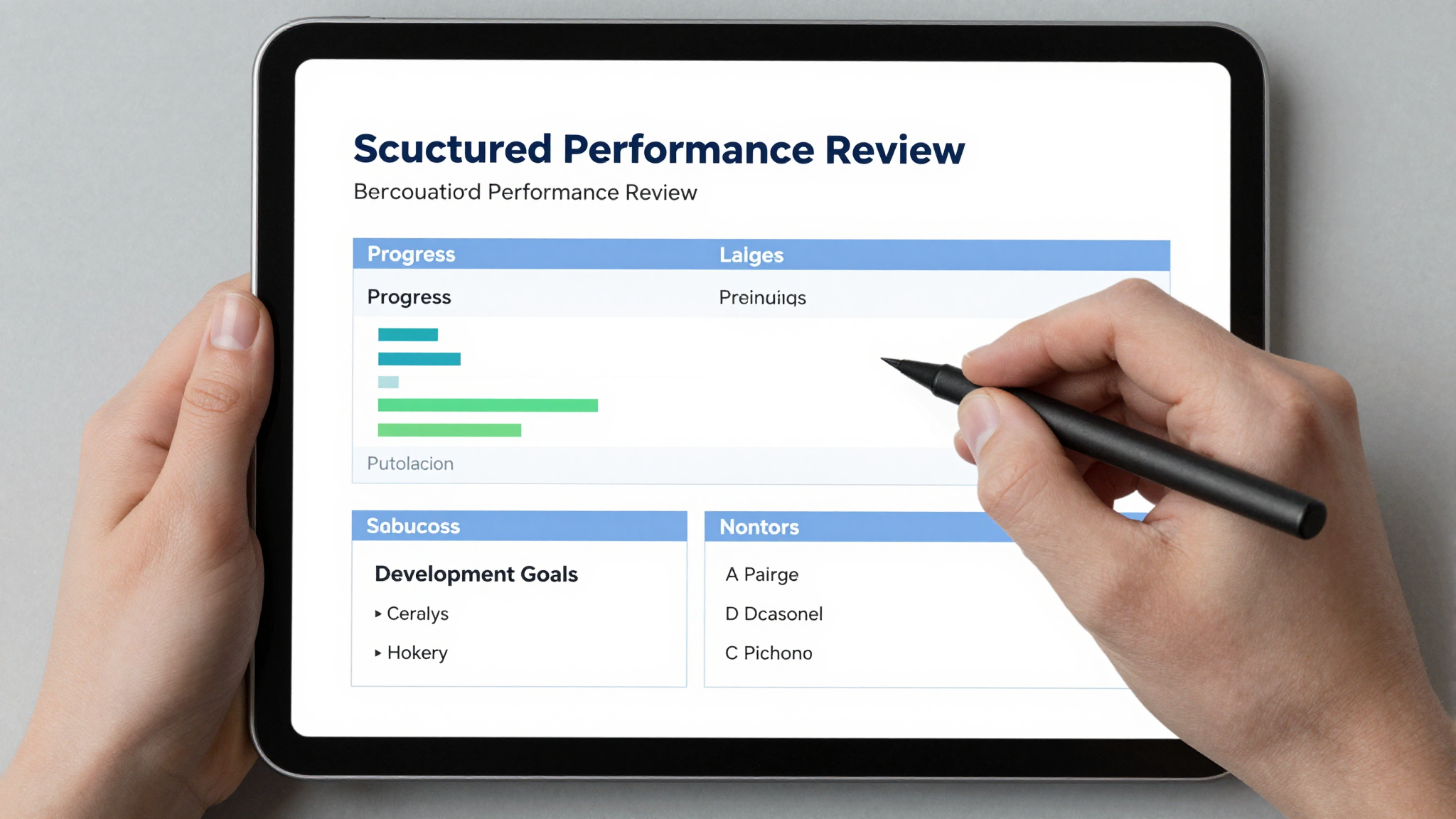
- Regular evaluations: At minimum, annual performance reviews with documented outcomes. Biannual or quarterly reviews are recommended
- Two-way dialogue: Dutch employment law values the employee's input. Evaluations should be discussions, not one-sided assessments
- Written records: Every performance conversation should be documented with a signed summary. Email confirmations of discussions provide crucial evidence if disputes arise
The Performance Improvement Plan (Verbetertraject)
When an employee underperforms, Dutch law requires a formal improvement trajectory before any termination can be pursued:
- Clear notification: The employee must be explicitly told that their performance is insufficient, with specific examples and measurable criteria
- Adequate support: You must provide coaching, training, mentoring, or other support to help the employee improve. Simply identifying problems without offering solutions fails the "goed werkgeverschap" test
- Reasonable timeframe: The improvement period must be proportional — typically 3 to 6 months depending on the role and nature of the issues
- Regular check-ins: Progress meetings (at least monthly) with documented feedback on improvement or continued shortcomings
- Alternative positions: Before termination, you must genuinely explore whether the employee can be placed in a different suitable role within the organization
Common Pitfalls That Undermine Dismissal Cases
Courts regularly reject dismissal requests due to employer failures in the improvement process:
- "Sudden" underperformance: If previous reviews were positive or neutral, claiming sudden poor performance lacks credibility. Build a consistent track record
- vague feedback: "Not a team player" or "lacks initiative" without specific, documented examples will not satisfy a court
- Insufficient support: Employers who say "we expected self-improvement" without providing concrete tools and training will lose their case
- Unrealistic timelines: A 4-week improvement plan for complex behavioral issues signals that the employer wasn't genuinely committed to improvement