
Managing Sick Leave in the Netherlands
menu_book HR Teams Guide

Managing Sick Leave in the Netherlands

How to handle the Dutch 2-year sick leave obligation as an employer

schedule 14 min read · arrow_back Part of HR Teams
Managing Sick Leave in the Netherlands
healing
Employer Obligation 2 years
euro
Minimum Pay 70% of salary
assignment
Key Law Wet Poortwachter
gavel
WIA Assessment After 104 weeks

The Dutch Sick Leave System Explained

The Netherlands has one of the most extensive employer sick leave obligations in the world. When an employee reports sick, the employer is responsible for continued salary payment and active reintegration for up to 104 weeks (2 years).

This obligation applies from the first day of employment — there is no waiting period. Even an employee who falls ill during their first week triggers the full 2-year obligation.

Employer Obligations Under Wet Poortwachter

The Gatekeeper Improvement Act (Wet verbetering Poortwachter) sets strict procedural requirements for managing long-term sick leave:

  • Week 1: Report illness to the Arbo-dienst/company doctor
  • Week 6: Company doctor provides a problem analysis (probleemanalyse)
  • Week 8: Employer and employee create a reintegration plan (Plan van Aanpak)
  • Week 42: Report illness to UWV (the social security agency)
  • Every 6 weeks: Evaluate progress and update the reintegration plan
  • Week 52: Year one evaluation — reassess reintegration strategy
  • Week 88: Employee applies for WIA disability benefit assessment
  • Week 104: End of wage payment obligation (if compliant)

Salary Continuation Requirements

During illness, employers must continue paying salary according to these rules:

  • Year 1: Minimum 70% of salary (many CLAs and contracts require 100%)
  • Year 2: Minimum 70% of salary (often 70% is standard)
  • Minimum wage floor: In Year 1, the payment cannot fall below minimum wage
  • Maximum cap: The payment is capped at the maximum daily wage (maximumdagloon)

Reintegration: First and Second Track

Employers must actively pursue reintegration of sick employees through two tracks:

  • First track (spoor 1): Return to own position or adapted position within the current company. This includes role adjustment, reduced hours, workplace modifications, or reassignment to a different suitable position.
  • Second track (spoor 2): If return to the current employer is not possible, the employer must facilitate reintegration with another employer. This typically involves outplacement services and job coaching.

UWV Sanctions for Non-Compliance

The UWV audits reintegration efforts when the employee applies for WIA benefits at week 88. If the UWV deems the employer's efforts insufficient, the consequence is severe:

  • Loonsanctie: Extended wage payment obligation — the employer must continue paying salary for an additional year (up to 156 weeks total)
  • Common failures: Late problem analysis, insufficient second-track efforts, gaps in documentation, failure to seek expert advice when needed

How It Works

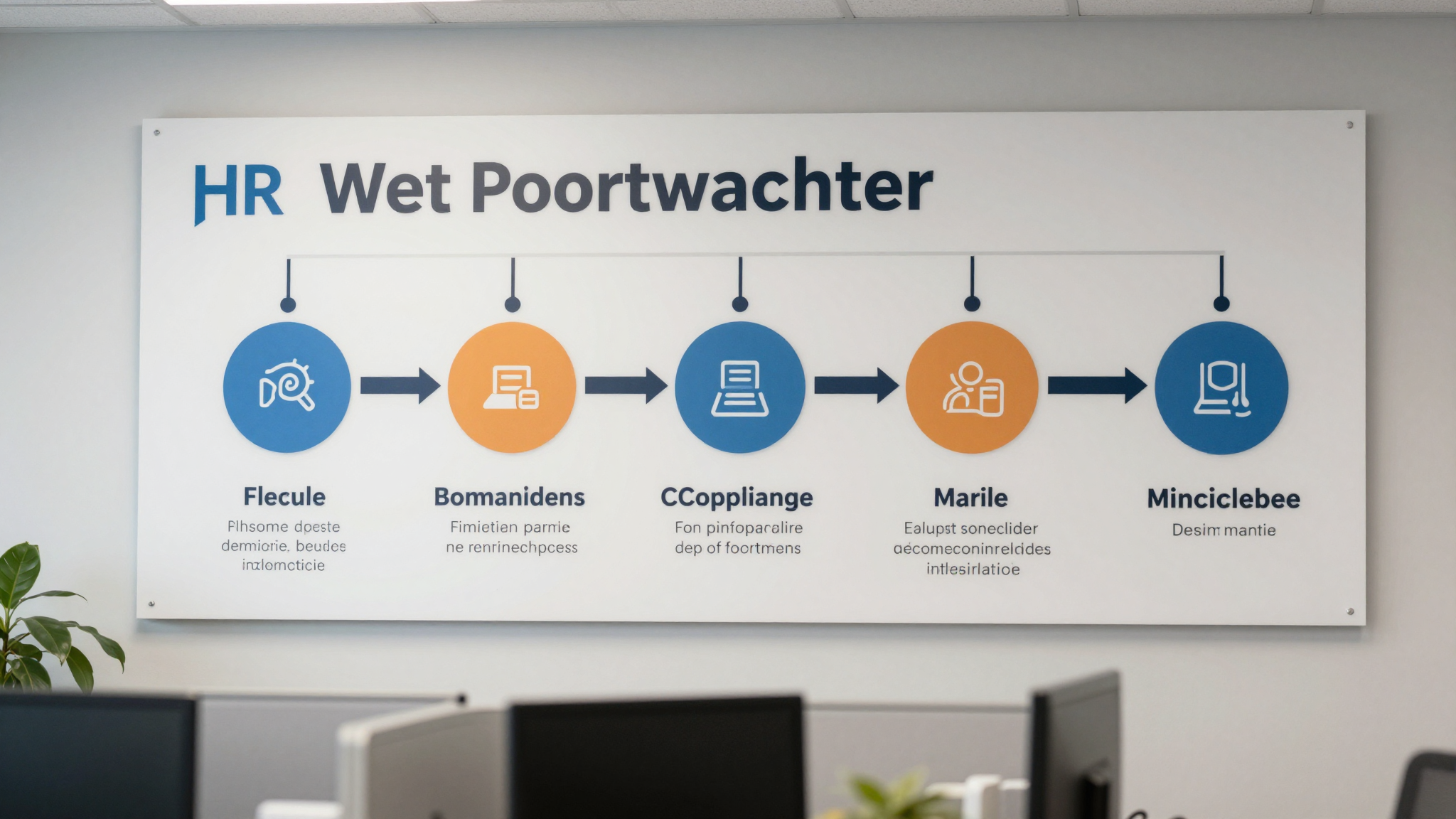
Step-by-Step Process

01

Illness Reporting

Employee reports sick — employer notifies Arbo-dienst and begins documentation.

02

Problem Analysis & Plan

Company doctor assesses situation; employer and employee create reintegration plan within 8 weeks.

03

Active Reintegration

Execute first-track and second-track reintegration with regular evaluations every 6 weeks.

04

WIA Preparation

At week 88, support employee's WIA application with complete reintegration dossier.

Managing Sick Leave in the Netherlands — key insight
Why It Matters

Key Insights for Your Business

trending_up
93% of companies report smoother operations with proper HR setup
shield
€25K+ average savings from avoiding common compliance penalties
schedule
4–6 weeks to fully operational with expert guidance vs. 3+ months DIY

"Having the right HR infrastructure in place from day one saved us months of fixing problems later. It's the foundation everything else builds on."

— HR Director, International Company in NL
Managing Sick Leave in the Netherlands — results
Important Considerations

What to Watch Out For

high

Loonsanctie Risk

Insufficient reintegration efforts result in a third year of salary payments — potentially €50,000+ additional cost.

high

Dismissal Protection During Illness

You cannot dismiss a sick employee during the first 2 years of illness (with very narrow exceptions).

medium

Documentation Gaps

Every step must be documented. Missing documentation is treated as failing to meet obligations.

Common Questions

Frequently Asked Questions

Can we dismiss an employee who is frequently sick?

Frequent short-term illness can potentially justify dismissal via the court (kantonrechter), but only if it causes unacceptable operational disruption and there is no reasonable accommodation possible.

What if the employee refuses to cooperate with reintegration?

You can suspend salary continuation after properly warning the employee. However, the threshold is high — document everything and seek legal advice first.

Do we need sick leave insurance?

It is not mandatory but strongly recommended, especially for smaller companies. Verzuimverzekering covers salary continuation costs and typically includes case management support.

What happens at the end of 2 years?

If the UWV approves the reintegration efforts, the wage payment obligation ends. The employee either returns to work, receives WIA benefits, or the employment can be terminated via UWV.

Need Help?

Ready to get started with HR Teams?

Book a free 30-minute consultation. We'll assess your situation and propose a clear path forward — no commitment required.