
As the corporate landscape emerges fully from the reactive transitions of the early 2020s, Human Resources has ascended from an administrative support function to the absolute tip of the strategic spear. The ways we recruit, manage, and retain talent are shifting at an unprecedented velocity, heavily influenced by rapid technological advancements, evolving legal frameworks, and fundamentally changing employee expectations.
For companies operating in the highly competitive Dutch labor market, merely maintaining the status quo is a recipe for talent attrition. To thrive, leadership teams must proactively embrace the HR trends 2025 Netherlands has to offer.
From the total normalization of artificial intelligence to deeper commitments regarding diversity and social responsibility, here are the defining trends that will separate successful, resilient organizations from those left struggling for relevance.
1. The Codification of Hybrid Work
Hybrid working is no longer a perk; it is a permanent structural reality. What defines 2025, however, is the shift from informal hybrid arrangements to strict legal codification and optimized execution.
The Flexible Working Act
The hybrid work Netherlands landscape is heavily anchored by the Flexible Working Act (Wet flexibel werken). Employees possess robust legal rights to request adjustments to their working hours, working times, and crucially, their place of work. While an employer can deny a request to work from home, they must provide severe, documented business justifications.
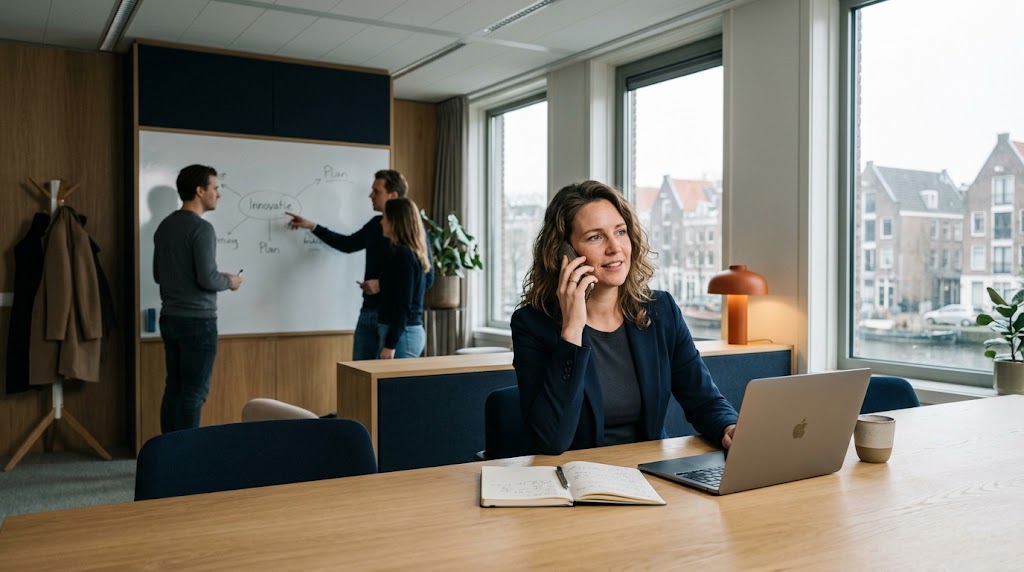
In 2025, the trend is moving away from arbitrary “three days in, two days out” mandates toward “purpose-driven presence.” The office is no longer the default location for individual, focused work; it has been repurposed as a collaborative hub specifically designed for team building, creative ideation, and the cultivation of company culture. Companies that force employees back to the office simply to monitor them will face immediate rebellion and high turnover.
2. Artificial Intelligence in HR Operations
The explosion of Generative AI has moved from a novelty talking point to a core operational requirement. The integration of AI in HR is rapidly moving from peripheral optimization to deep systemic involvement, particularly in the tech-forward Netherlands.
Augmenting, Not Replacing
AI is transforming recruitment. Intelligent algorithms are now standard for drafting hyper-optimized job descriptions, parsing thousands of CVs to identify non-traditional candidate matches, and conducting preliminary chat-based screening interviews. This allows HR professionals to focus entirely on the human element of recruiting: assessing cultural fit and negotiating terms.
However, the use of AI introduces severe compliance risks regarding bias and data privacy under the GDPR and the incoming European AI Act. In 2025, HR departments must implement strict governance frameworks dictating how AI makes decisions, ensuring that algorithms do not inadvertently replicate human biases regarding gender, ethnicity, or age.
3. Skills-Based Hiring and Internal Mobility
The traditional reliance on degrees, pedigrees, and linear career histories is collapsing. Because the specific technical skills required by companies are evolving faster than universities can adapt, employers are pivoting hard toward skills-based hiring.
Valuing Adaptability Over Pedigree
Instead of requiring a candidate to have “five years of experience as a Marketing Manager,” progressive Dutch companies are assessing pure competencies: “Can this person analyze a dataset, write compelling copy, and adapt to a new CRM?”
This deeply connects with the massive surge in internal upskilling. As we discussed in our article, Can’t Seem to Find New Talent? Try Upskilling!, companies are treating their existing workforce as their primary talent pool. By mapping the granular skills of their current employees, HR can laterally shift high-potential individuals into emerging roles rather than fighting an expensive battle on the external talent market.
4. Hyper-Focused Employee Well-being and Burnout Prevention
The intense focus on employee well-being trends is partially driven by empathy, but mostly driven by economics. In the Netherlands, an employer is legally obligated to continue paying a sick employee for up to two full years. Consequently, burnout is arguably the most expensive risk a Dutch company faces.
Moving Beyond Generic Perks
In 2025, generic “well-being” perks—like a company subscription to a meditation app or free fruit in the canteen—are viewed as wildly insufficient. Real well-being strategies are systemic. They involve enforcing “right to disconnect” policies to prevent after-hours digital burnout, training middle managers to spot the early psychological signs of chronic stress, and offering flexible, personalized benefit packages that allow employees to choose the support they actually need (e.g., child-care subsidies, financial counseling, or extended bereavement leave).
If your company is struggling to manage absenteeism costs, engaging a dedicated HR outsourcing partner to rebuild your preventive health strategy is vital.
5. Elevated DEI and ESG Reporting
Diversity, Equity, and Inclusion (DEI) initiatives are maturing from marketing buzzwords into non-negotiable compliance metrics, heavily intertwined with Environmental, Social, and Governance (ESG) reporting requirements.
Data-Driven Diversity
The DEI diversity Netherlands approach in 2025 relies on hard data. The EU’s Corporate Sustainability Reporting Directive (CSRD) explicitly requires large companies to publicly report on social metrics, including the diversity of board members, gender pay gaps, and their impact on the local workforce. Even if your company falls below the size threshold for mandatory reporting, your larger B2B clients will increasingly demand this data from you to satisfy their own supply chain compliance.
HR is now responsible for ensuring equitable hiring practices, transparent salary structures, and inclusive leadership development. Failing to demonstrate tangible progress in these areas will critically damage a company’s ability to win public tenders or attract modern Gen Z and Millennial talent.
6. The “Green HR” Agenda
Closely tied to ESG, sustainability has firmly entered the HR domain. Dutch employees are highly environmentally conscious, especially within the Technology and SaaS industries. They are actively choosing employers whose environmental values align with their own.
“Green HR” initiatives include subsidizing fully electric company cars or public transport cards (NS Business Cards) over petrol allowances, offering heavily incentivized bicycle plans, aligning corporate pension funds with sustainable investments, and building eco-friendly office spaces.
Conclusion: Adapt or Atrophy
The traditional definition of “managing personnel” is obsolete. The HR department of 2025 is a data-driven, technologically advanced, strategically vital organ that directly influences the company’s bottom line and public reputation.
Attempting to navigate hybrid work laws, AI governance, and complex DEI reporting using legacy spreadsheets and outdated mindsets will rapidly lead to talent drain and compliance failure.
To ensure your strategies are not just compliant, but genuinely competitive, you must continually audit your approach. If these trends feel overwhelmingly distant from your current operations, contact our strategic HR consultants today. We can help bridge the gap between your current processes and the future of the Dutch workplace.